Tribble Fan Fiction #9: Professor Tribble’s Guide to the Galaxy
Tribble Fan Fiction #9
Lecture One: Introduction to Being a Tribble
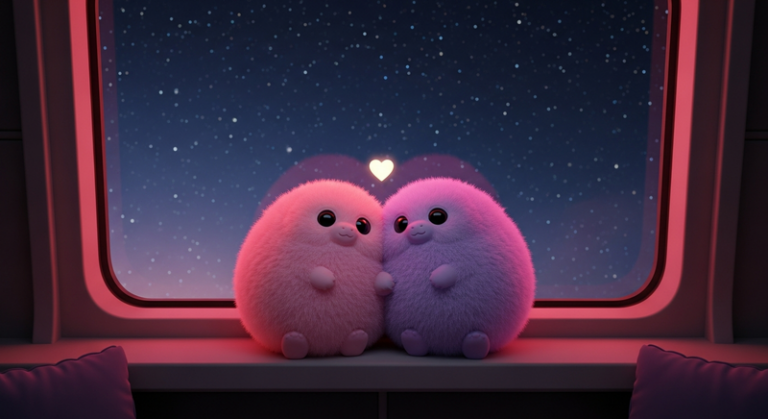
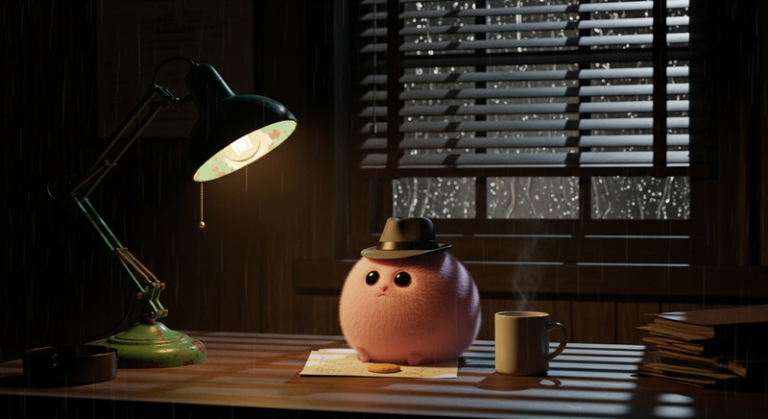
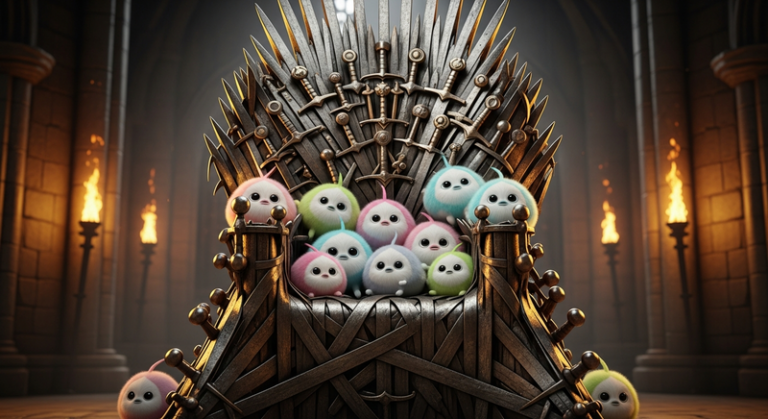
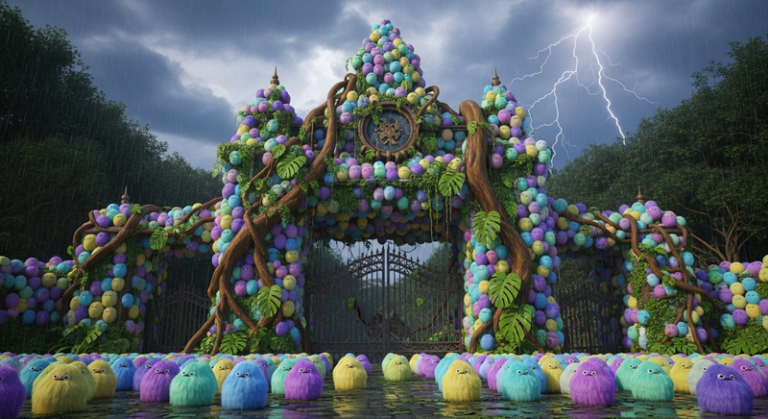
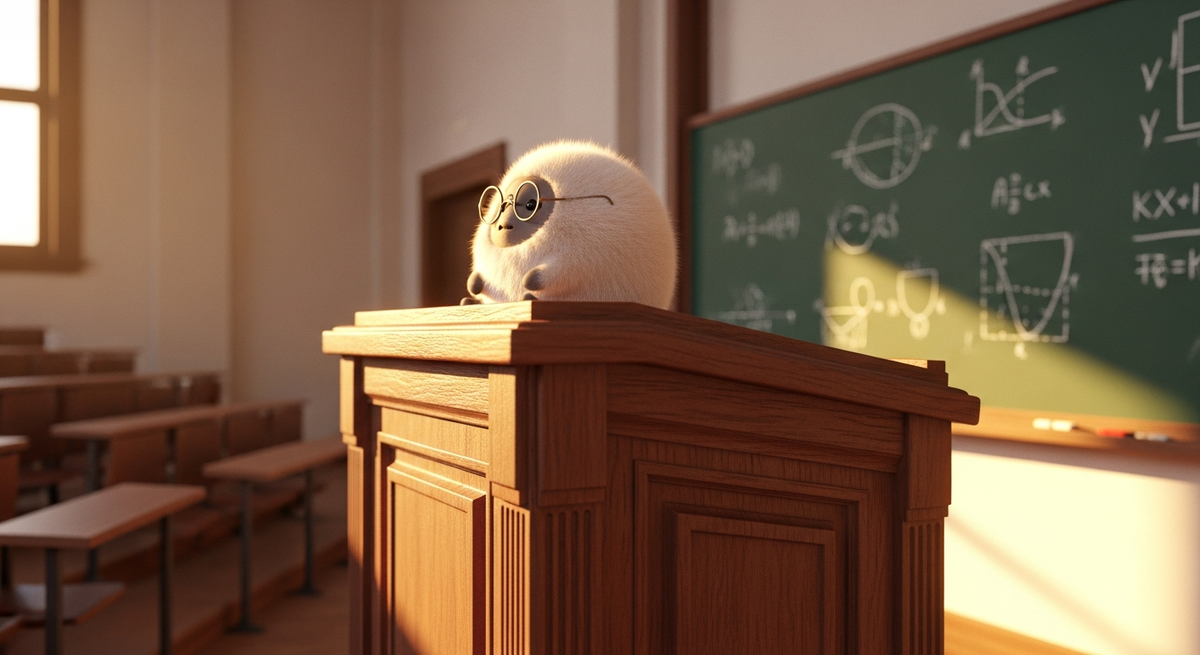
The following is a transcript of lectures delivered by Professor Emeritus Prrrt of the Tribble Academy of Sciences, translated from the original Purr by Dr. Yara Tal, Federation Tribble Ambassador. Professor Prrrt is the first tribble to hold an academic appointment at any institution in the Alpha Quadrant. She is also the first tribble to have a chair — although, being a tribble, she sits on top of it rather than in it.
Good morning. I am Professor Prrrt. You may call me Prrrt, or Professor, or “that round thing on the podium.” I am aware of all my nicknames. I find them endearing.
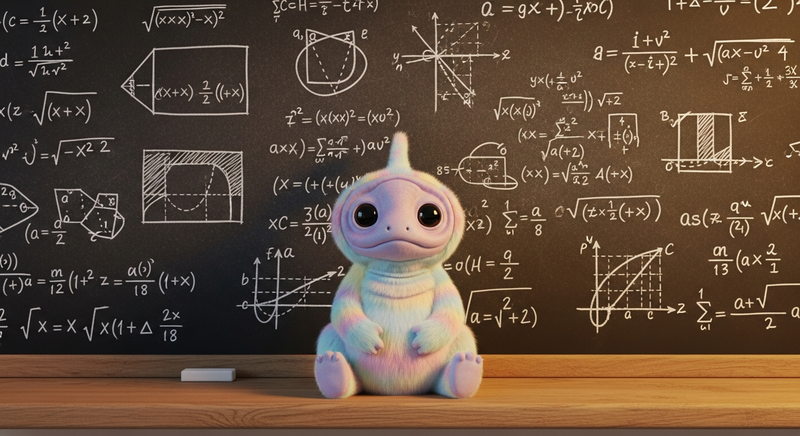
Welcome to Tribble Studies 101: An Introduction to Being a Tribble, As Explained by a Tribble. This is the first course of its kind at Starfleet Academy, and I want to acknowledge the absurdity of the situation. I am a small, round, furry creature attempting to educate a room full of bipeds who are, on average, sixty times my mass. Several of you could eat me. Please don’t.
Let us begin with the basics.
I am a tribble. My species name is Polygeminus grex, which translates roughly to “multiple-offspring herd animal.” This is accurate but reductive, like calling a Vulcan “that logical thing” or a human “that worrying thing.” We are more than our biology, though our biology is — I will admit — quite a lot.

Lecture Two: On the Subject of Eating
I have been asked to address the eating.
Yes, we eat a lot. Yes, we eat your grain. Yes, we ate Captain Kirk’s quadrotriticale supply in 2268 and caused a diplomatic incident that nearly destabilized Sherman’s Planet. I am not going to apologize for this. Kirk left the grain unguarded in an accessible storage bay on a ship full of tribbles. This is like leaving a bottle of Romulan ale on a table at a Klingon party and being surprised when it disappears.
Let me explain tribble metabolism. We convert food to energy — and offspring — at a rate that your scientists have described as “biologically improbable.” This is flattering. We prefer “efficient.” A single tribble, given unlimited food, will produce a new generation every twelve hours. This is not greed. This is evolution. On our homeworld — Iota Geminorum IV, a planet with unpredictable food cycles — the ability to reproduce rapidly during periods of abundance was the difference between survival and extinction.
You see scarcity as normal and abundance as temporary. We see abundance as an emergency — a narrow window in which we must create as much life as possible before the food disappears. When you watch a tribble eat frantically, you are watching three billion years of evolution screaming “NOW! NOW! BEFORE IT’S GONE!”
We are not pests. We are optimists with a deadline.
“A tribble’s relationship with food is not addiction. It is religion. We worship at the altar of quadrotriticale, and our sacrament is consumption.” — Professor Prrrt, Lecture Notes
Lecture Three: On Purring
The purr is not what you think it is.
Humanoids hear a tribble purr and think: contentment. Comfort. The biological equivalent of a cat in a sunbeam. This is not wrong — we do purr when content — but it is like saying that human speech is “making mouth sounds.” Technically accurate. Spectacularly incomplete.
The tribble purr operates on forty-seven distinct frequencies, each carrying different information. Low-frequency purrs communicate emotional state. Mid-range purrs convey spatial awareness — where we are, how many of us are nearby, whether the local environment is safe. High-frequency purrs, above humanoid hearing range, carry complex data about food sources, temperature gradients, and — we now believe — abstract concepts that your language does not have words for.
When a room full of tribbles purrs together, we are not simply making pleasant noise. We are having a conversation. We are sharing a map. We are building a real-time model of our environment from forty-seven layers of overlapping information, processed collectively by every tribble in range.
Your word for this is “network.” Ours is untranslatable, but the closest approximation in Standard is: “the feeling of knowing exactly where everything warm is.”
Lecture Four: On Klingons
I will now address the Klingon situation.
We don’t like Klingons. This is well-documented and requires no diplomatic softening. When a tribble encounters a Klingon, we emit a high-pitched distress call that your species perceives as “screaming.” This is instinctive. We cannot control it. We have tried. We have attended workshops. It doesn’t help.
The reason is simple: Klingons smell like predators. Not your predators — ours. On Iota Geminorum IV, the apex predator was a creature called (in translation) the “ground thunder” — a large, warm-blooded carnivore that hunted by body heat and killed by compression. It was loud. It was aggressive. It smelled like copper and adrenaline. It ate tribbles the way tribbles eat grain: constantly, enthusiastically, and in enormous quantities.
Klingons smell exactly like ground thunder.
We know, intellectually, that Klingons are not ground thunder. They are bipedal, they use tools, and they have — if the stories are to be believed — a complex philosophical tradition centered on the concept of honor. But our hindbrain doesn’t care about philosophy. Our hindbrain smells copper and adrenaline and says RUN, except we can’t run because we are round, so instead we scream.
I apologize for the inconvenience. I do not apologize for the instinct. Three billion years of evolution outranks interstellar diplomacy.
“I have been asked if tribble-Klingon relations will ever improve. I have also been asked if water will ever flow uphill. I give both questions the same answer.” — Professor Prrrt, Q&A session
Lecture Five: On the Meaning of Tribble Life
I am aware that many of you are here because you think tribbles are cute. This is acceptable. We are cute. We have evolved to be cute. Cuteness is a survival strategy — the biological equivalent of a force field. A creature that makes you say “awww” is a creature you are less likely to kill. We are the galaxy’s most successful pacifists.
But I want to leave you with something beyond cuteness.
Tribbles do not build cities. We do not write symphonies. We do not wage wars or sign treaties or explore strange new worlds. By every metric that your civilizations use to measure worth — achievement, ambition, legacy — we are nothing. We are round. We are soft. We eat and purr and make more of ourselves. That’s it. That’s the whole tribble.
And yet.
We have existed for three billion years. We have survived ice ages, predators, planetary extinction events, and the entire Klingon Empire’s concerted effort to eradicate us from existence. We have done this without weapons, without technology, without so much as a pointed stick. We have survived because we are warm, and soft, and we make the creatures around us — even the ones who think they’re too sophisticated for it — feel, for just a moment, that everything might be okay.
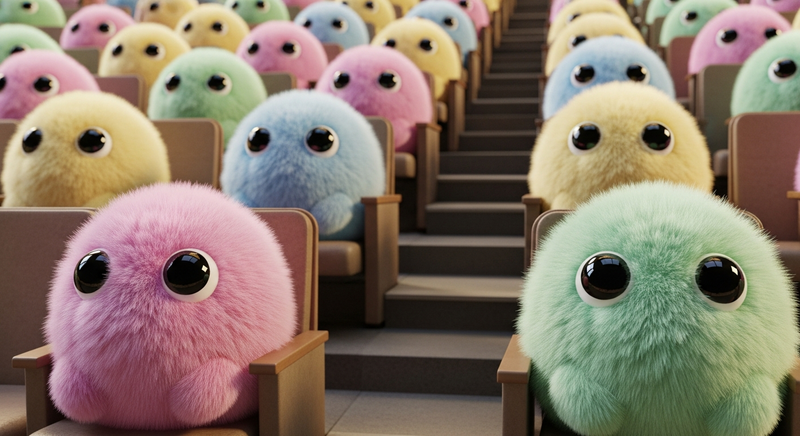
That is our contribution to the universe. Not cities. Not symphonies. Comfort. Warmth. The simple, radical act of being alive and soft in a galaxy that is mostly cold and hard.
You think that’s nothing? Try going without it. Try spending one day in a universe where nothing is soft, nothing purrs, and no one is happy just because you’re warm.
You’d miss us. You always do.
Class dismissed. I’ll be on the podium if anyone wants to hold me. Office hours are whenever there’s grain.
Professor Prrrt’s lecture series was attended by 4,200 Starfleet cadets and streamed by an estimated 340 million viewers across the Federation. It was the most-watched academic lecture in the history of Starfleet Academy. Professor Prrrt was awarded an honorary doctorate by the Vulcan Science Academy, making her the only tribble to hold a degree from an institution that described her species as “fascinating but illogical.” She accepted the honor by purring for seven continuous minutes. The Vulcans found this acceptable.