Tribble Fan Fiction #14: Sgt. Pepper’s Lonely Tribbles Club Band
Tribble Fan Fiction #14
Side A, Track 1: I Am the Tribble
Liverpool, 1962. The Cavern Club smelled like sweat, beer, and ambition — three substances that, when combined in the right proportions, produce rock and roll. The Beatles were on stage, four young men in matching suits playing twelve-bar blues to a crowd of teenagers who didn’t know yet that they were witnessing the beginning of the modern world.
John Lennon found the tribble in the bass drum.
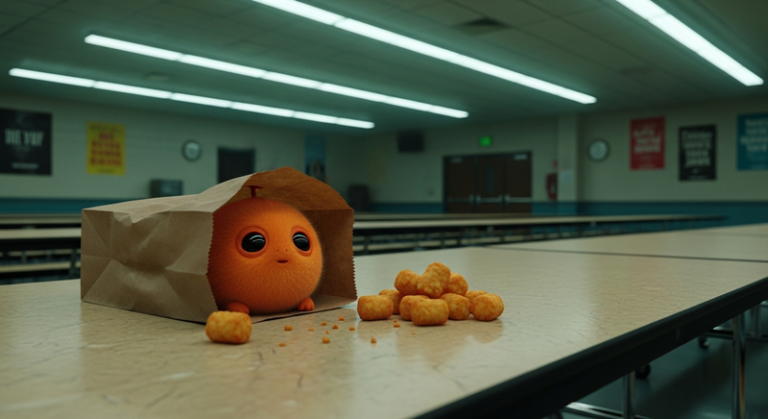
He’d kicked it open between songs — the drum, not the tribble — to adjust the dampening, and there it was: a small, round, bright red ball of fur, vibrating gently against the drumhead. It had apparently been living inside Ringo’s kit for at least a week, because Pete Best had mentioned a “funny noise” coming from the drums before Ringo replaced him, and Pete Best had never been right about anything except that one time.
“What the bloody hell is that?” John said, picking it up.
“It’s a tribble, isn’t it,” George said, with the quiet certainty of a man who would one day travel to India, study with Ravi Shankar, and still consider a vibrating fur ball the most spiritual thing he’d ever encountered.
“A what?”
“A tribble. Me mum’s neighbor had one. They purr.”
“Everything purrs in Liverpool, George. It’s the damp.”
Paul took the tribble. He held it up to the microphone. It purred. The crowd — two hundred teenagers packed into a basement with the ventilation of a coffin — went absolutely mental.
“Play it again!” someone shouted.
“It’s not an instrument,” John said.
“It’s better than Pete Best,” Paul said.
Nobody argued.
Side A, Track 2: Norwegian Tribble
Brian Epstein, the band’s manager — a man whose job was essentially to keep four barely-controllable Liverpudlians pointed in the direction of success — discovered the tribble situation during a meeting at EMI Studios on Abbey Road.
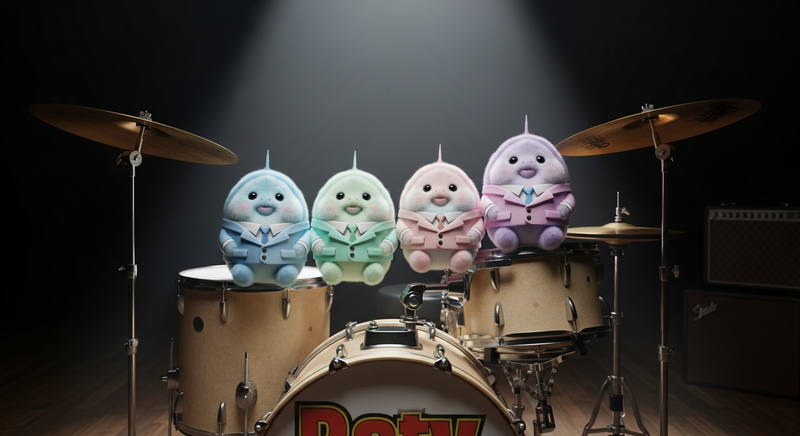
“There are seven of them, Brian,” Paul explained, cradling the original red tribble in his lap. “They’ve had babies.”
“In the studio?”
“In Ringo’s drums. And John’s amplifier. And that cupboard in Studio Two where George keeps his sitars.”
Brian looked at the ceiling the way a man looks at the ceiling when he is calculating the exact point at which his life went wrong. “Can we get rid of them?”
“No,” said four voices simultaneously.
The tribbles stayed. George Martin — the producer, a classically trained musician who had the patience of a saint and the ears of a bat — discovered that the tribbles’ purring registered as a low-frequency hum on the studio monitors. It was warm. It was constant. It was, if you listened carefully, in the key of B-flat.
“That’s rather interesting,” George Martin said, because George Martin said that about everything, including the time John wanted to record a song by hanging from the ceiling.
“Can we use it?” John asked.
“The purring?”
“Yeah. Layer it under a track. See what happens.”
What happened was “Norwegian Wood.” The final mix — the one that went to vinyl, the one that changed folk-rock forever — had a tribble purring under the sitar line. You can’t hear it consciously. You feel it. That warmth at the bottom of the song, the thing that makes it feel like sitting by a fire while something beautiful and sad happens outside — that’s a tribble.
Nobody ever told the public.
“Every Beatles record from Rubber Soul onward has a tribble in it somewhere. I’m not telling you which tracks. Listen carefully. You’ll feel it.” — George Martin, in a 1993 interview he later denied giving
Side B, Track 1: All You Need Is Purr
By 1967, the tribble population at Abbey Road had reached thirty-four. George Martin had given up trying to control them and instead incorporated them into the recording process the way you might incorporate weather — as a force of nature that was going to be there whether you liked it or not.
Each Beatle had developed their own relationship with the tribbles:
John used them as a creative tool. He’d sit in a corner of the studio with three or four tribbles in his lap, strum his guitar, and let the purring frequencies interact with the strings. “They’re like a chorus,” he told Yoko, who was skeptical of everything except John. “A fuzzy, round, adorable chorus that eats guitar picks.”
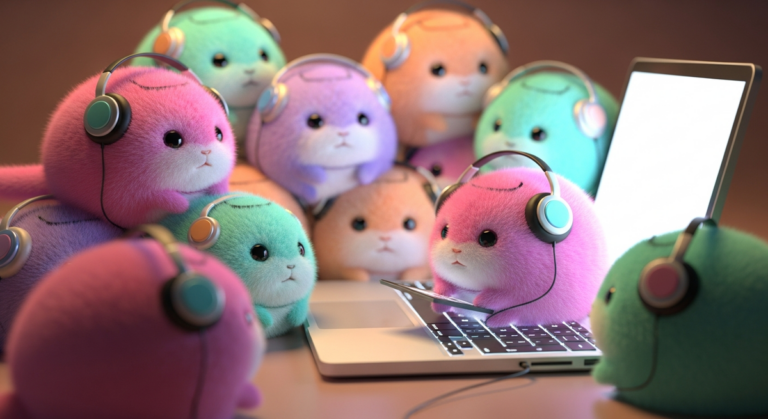
Paul was the caretaker. He built a small habitat in Studio Two from spare acoustic panels and velvet curtains, with feeding stations and a water dish and a tiny sign that read “THE TRIBBLE CLUB” in hand-painted letters. He named every tribble. He kept a list. The list was more organized than most of his songwriting notebooks.
George meditated with them. He’d sit cross-legged on the studio floor, surrounded by tribbles, playing his sitar while they purred in harmonic resonance. He said the tribbles understood something about vibration that humans had forgotten. He was probably right. He was usually right about the things nobody else was thinking about.
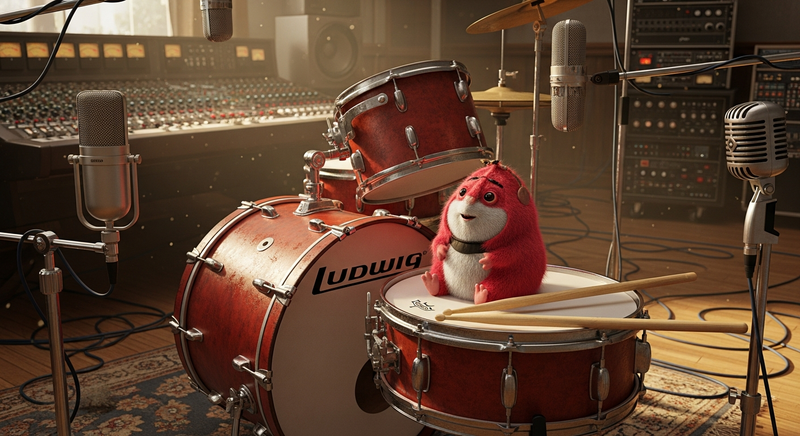
Ringo just liked them. He picked them up, he put them down, he let them sit on his drums during takes. “They’re good lads,” he said, which was Ringo’s highest compliment and one he extended to approximately eighty percent of all living things.
The Sgt. Pepper sessions were legendary for many reasons — the orchestral crescendo of “A Day in the Life,” the experimental tape loops of “Being for the Benefit of Mr. Kite!,” the forty-piece orchestra playing in evening dress. But the tribble contribution has never been officially acknowledged. The sustained chord at the end of “A Day in the Life” — forty-three seconds of piano, played by every person in the studio simultaneously — was accompanied by thirty-four tribbles purring in unison. The frequency filled the bottom of the mix like warm water filling a bath.
Listen to it on headphones. Close your eyes. The thing you feel — the thing that makes the ending of that song feel like the end and beginning of the world — is partly a tribble.
Side B, Track 2: Let It Purr
The breakup was hard on the tribbles.
By 1969, the sessions that would become Let It Be were tense, fractured affairs — four men who loved each other and couldn’t stand each other sitting in a cold film studio at Twickenham, trying to make music while their friendship came apart at the seams. The cameras rolled. The arguments escalated. George quit temporarily. John brought Yoko. Paul tried to hold everything together through sheer force of optimism and increasingly desperate bass lines.
The tribbles, who had spent seven years in an environment saturated with creative joy, were confused. They could feel the tension. Tribbles are empaths — they absorb the emotional temperature of a room the way a sponge absorbs water. For the first time in their lives at Abbey Road, the tribbles stopped purring.
George Martin noticed first. “They’ve gone quiet,” he told Paul. “All of them. They haven’t purred since Tuesday.”
“Neither have we,” Paul said.
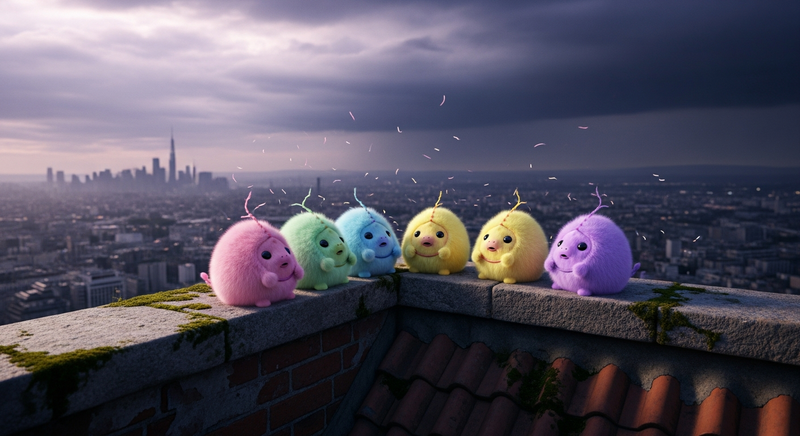
The rooftop concert — January 30, 1969, the last time the Beatles performed together — was not planned as a goodbye. It was planned as a surprise, an impulsive decision to play live one more time, on the roof of the Apple Corps building at 3 Savile Row while London looked up in bewilderment.
Paul brought five tribbles to the roof. He set them on Ringo’s drum riser, where they sat in the January cold, fur ruffled by the wind, small and round and patient. When the band started playing — “Get Back,” then “Don’t Let Me Down,” then “I’ve Got a Feeling” — the tribbles began to purr.
It was the first time they’d purred in weeks. The sound was captured on the recording — a low, warm hum underneath the guitars and the wind and the traffic noise from the street below. You can hear it if you listen for it. Most people don’t. Most people hear the Beatles.
But the tribbles heard something else. They heard four people who had changed the world, playing together for the last time, and the tribbles did the only thing they knew how to do: they purred, because the music was beautiful, and because beauty — even temporary beauty, even beauty that’s about to end — deserves acknowledgment.
John looked at the tribbles as the police arrived to shut them down. He picked one up. It purred against his hand.
“You know what,” he said, “I’d like to say thank you on behalf of the group and ourselves, and I hope we passed the audition.”
The tribble purred. The music stopped. The sixties were over.
The Abbey Road tribbles were divided among the four Beatles after the breakup. John took seven to New York. Paul took twelve to his farm in Scotland. George took ten to Friar Park. Ringo took five on tour. They never purred the same way apart as they had together. Engineers who worked at Abbey Road in the 1970s reported hearing faint purring in Studio Two late at night — a residual vibration, trapped in the walls, echoing the frequency of something that had been warm and round and beautiful, and was now, like everything else from that era, a memory you could feel but not quite hold.