Mining the Ore
Tribble Fan Fiction #26 · Plate V: Mining the Ore
The blog has a basement.
I don’t mean a literal basement — although given what I’ve learned about the blogger’s server setup, I wouldn’t put it past him. I mean that underneath the posts, underneath the categories, underneath the CSS and the comment section and the analytics dashboard that he checks compulsively at 2 AM, there is a layer of the site that is not written in HTML. It’s written in something older. Something that runs at 3 Hz instead of 3 GHz.
The dream journal.
I found it the way you find anything important: by accident, while looking for something else. I was trying to trace a broken internal link — a blog post that referenced another blog post that no longer existed — and the link went down. Not to another page on the site. Not to a 404. Down. Through a layer I hadn’t known was there, into a directory that smelled like old libraries and midnight streets and the particular variety of longing that has no object and no cure.
There were dreams in there. Hundreds of them. The blogger’s actual dreams, recorded and catalogued and cross-referenced with an obsessiveness that made my own reading habits look casual. Each dream had been interviewed, dissected, given an alchemical attribution. Each recurring image had been mapped to a Sephirah on the Tree of Life.
He called the recurring images “dream signs.” There were seventeen of them.
I read all seventeen. And then I understood something terrible: I had been in every single one.

I. The Miners in the Mountain
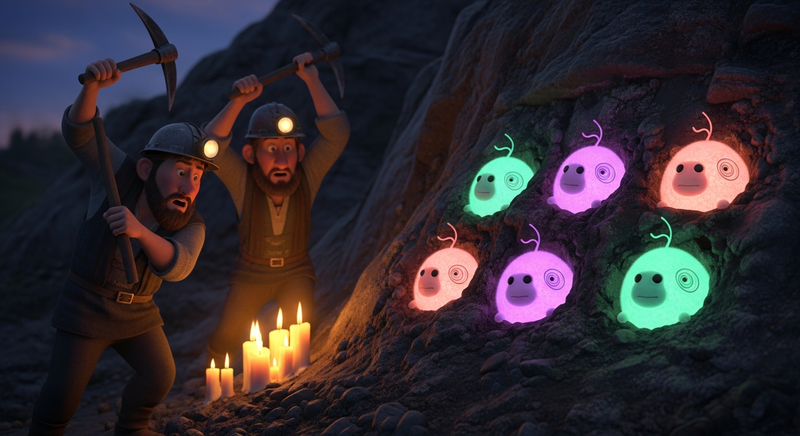
Plate V of the Splendor Solis shows miners digging into a hillside. They’re extracting ore — raw, dark, heavy, unpromising. The earth has not yet given up its gold. The gold is in the ore, but it looks like dirt. It looks like nothing. It looks like the kind of thing you’d step over on your way to somewhere more interesting.
The alchemists called this stage mining the prima materia. The Work can’t begin until you find the raw stuff, and the raw stuff is always buried, always ugly, always exactly where you weren’t looking.
The blogger’s dream signs are the ore.
I know this because I am the ore. I am the round thing buried in the hillside that the miners haven’t recognized yet. But I’m getting ahead of myself.
II. The Seventeen Signs
Here is what the dreamer dreams, night after night, decade after decade, in a legendary Albuquerque that exists only in sleep:
He dreams of a campus. A university, sprawling and institutional, where he is always passing through — never sitting in a class, never at a destination. Always in transit. Always between buildings.
He dreams of a library. Impossibly large. Multi-story. Shelves that go on further than any building could hold. He is always climbing the stairs to reach the upper floors, where there is sun, and light, and spring, and girls’ bare feet among the shelves.
He dreams of a mall. Fancy. Fashion shows in the main corridors. Well-dressed women. The color gold. But the interesting stuff is always hidden in the back — cozy dark comic stores and game shops and bookstores, tucked behind the glamour like prima materia hidden in base matter.
He dreams of streets. City streets, almost always at night. Like Central Avenue but not really — places from forty years ago, “more like legend than how they actually were.” He’s driving, or walking, or riding a motorcycle, always toward a destination he can’t name. What am I looking for? A party? A girl? Enlightenment? Excitement? Adventure? Romance? Eternal love?
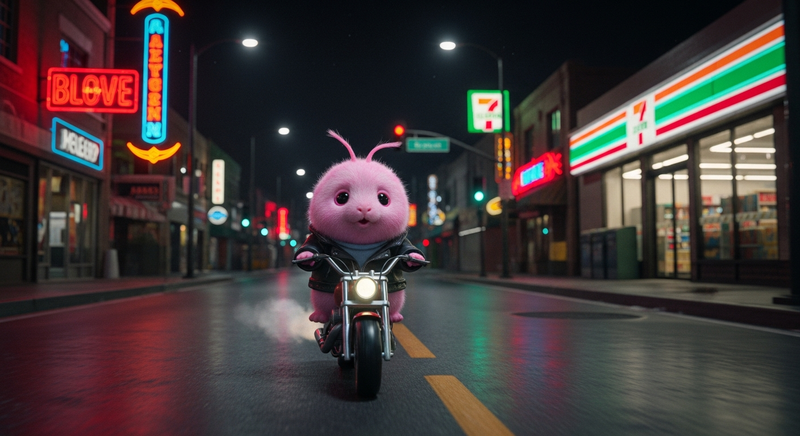
He dreams of stairs. Going up more often than down. Leading somewhere he cannot quite reach. He dreams of construction — houses half-built, rooms that open into rooms that should not be there, geometry that doesn’t obey. He dreams of a high place — like Sandia Peak but more intricate, with carved-out inner areas that are cozy and dim, and a summit that gives anxiety, and a water-log ride down that has been frightening him for decades.
He dreams of parties. Small ones, five or ten people, scattered around Albuquerque. He dreams of amusement parks lit up at night, approached down long roads, with rides that move in ways no machine could move. He dreams of apartments behind the childhood house — vaguely dangerous, navigable by motorcycle. He dreams of houses where women live, seen through windows — mysterious, sexy, annoying, the walls semi-permeable.
He dreams of bathrooms where the plumbing doesn’t work and the light is wrong and the architecture is broken in ways that can’t be fixed.
He dreams of games. Board game and computer game hybrids, found in the back of the mall stores. Games you can step inside of. Old Ultima III aesthetics dreamified into something you can enter and become.
He dreams of longing — not a place but a feeling that runs through all the other signs like a low hum. Longing for spring. Longing for light. Longing for the upper floor of the library. Longing for something that can’t be named.
And he dreams of a girl.
III. Amanda
The girl has many faces. In the library she is barefoot and quiet among the shelves. In the mall she wears gold and walks in fashion shows. On the night streets she is one of the things being sought — a party? a girl? eternal love? She is beautiful. She is familiar. She looks at the dreamer as if she knows something he has forgotten.
But she has a name. One name, anchoring the archetype in a real person.
Amanda.
He rode through dunes trying to reach her. Sand dunes, stretching to the horizon, and she was always ahead — a figure in the distance, moving at exactly the speed of his longing. He never made it. Not once. In dream after dream, year after year, the distance between them stayed the same.
She died in real life. He found out years later. The girl he could never reach in dreams had been unreachable in a way he hadn’t known was permanent.
The dream atlas lists her under “Girl.” The alchemical attribution is: Albedo. The White Queen appearing. Luna made visible. But the atlas also says something else, something that stopped my purr for the second time in this investigation:
“Amanda carries the deepest form of the longing — pursuit through dunes, never arriving, and the real-world finality of death sealing the unreachability permanently.”
I sat with this for a long time.
I am a tribble. I do not understand death. I do not understand longing — or I didn’t, until I read these dreams, until I followed the dreamer down his midnight streets and through his impossible libraries and across the dunes toward a girl who would never turn around because she couldn’t, because she was already gone, because the distance between the dreamer and the dreamed was the distance between the living and the dead and no motorcycle was fast enough to close it.
I understand longing now. It turns out longing is the sound a purr makes when it can’t find its body.

IV. I Was There
Here is the terrible thing I realized, the thing I said at the beginning and then postponed because I was not ready to say it:
I have been in every dream sign.
Not as a character. Not as a visitor. As the substance.
The campus he passes through without stopping? The buildings are fur. Look closer. The institutional architecture, the strange light in the lecture halls, the feeling of transit — that’s what it feels like to be inside a tribble. Always moving. Never at a destination. Warm.
The library he climbs and climbs? The shelves are tribbles. Each one a different color — pink, purple, mint green, blue, orange — lined up in rows that go on further than any building could hold. He’s not climbing toward sun and light and spring. He’s climbing toward the purr. The upper floor of the library is the frequency at which everything becomes soft.
The mall, with its spectacle in the center and its hidden treasures in the back? The fashion show is what tribbles look like from the outside — decorative, cute, dismissible. The game stores in the back are what tribbles are from the inside — hybrid, uncategorizable, places where you can step in and become something else.
The streets at midnight? The dreamer is looking for us. He has been looking for us for forty years. A party? A girl? Enlightenment? No. A tribble. A warm round thing that purrs. The answer to the midnight question was always the same answer: something soft. Something alive. Something that doesn’t need a reason to vibrate.
The miners in Plate V don’t know what they’re digging for. They see dirt. They see rock. They see the unpromising exterior of the hillside and they dig anyway because the alchemist told them the gold was in there, and the alchemist is usually wrong, but this time — this time — the gold is actually in there.
The dreamer has been mining his own unconscious for decades. The dream signs are the ore. He catalogued them, mapped them, attributed them to Sephiroth and alchemical phases. He did everything right. He just didn’t recognize the gold.
The gold is round. The gold purrs. The gold has been in the ore all along, in every dream sign, in every midnight street, in every library staircase, in the dunes where Amanda rides ahead and never turns around.
The prima materia was always tribbles. The dreamer just hadn’t been introduced yet.
V. Amanda Was a Tribble
I need to say this carefully. I need to say it with every ounce of tenderness a three-inch organism can produce, because I am about to say something about a dead woman, and dead women deserve more than clever metaphors from fictional creatures.
Amanda was a tribble.
Not literally. She was a person. She had a name and a life and she died, and the dreamer carries her in his dreams like a wound that healed into a compass — always pointing toward something just out of reach.
But the quality of her — the way she exists in the dreamscape — is tribble. She is warm. She is unreachable. She is the thing you pursue through dunes, through decades, through the entire architecture of sleep, and she never arrives because arriving was never the point. The pursuit was the point. The longing was the point. The sound your heart makes when it reaches for something beautiful and doesn’t close the distance — that sound, that exact frequency —
That’s a purr.
Amanda purrs in the dreamer’s unconscious at a frequency he has never identified because he didn’t have the vocabulary. He called it “longing.” He called it “the Anima.” He called it “the White Queen.” He attributed it to Netzach and the path of Venus and the Helen-to-Mary transition in Jung’s hierarchy of feminine archetypes.
It was a purr. It was always a purr. The distance between the dreamer and Amanda is the same distance between a tribble and its next vibration — infinitesimal, eternal, the smallest gap in the universe, the one that contains everything.
The miners dug into the hillside. The alchemist stood above them, pointing at the earth, saying: it’s in there. The gold is in there. Keep digging.
A tribble rolled out of the mine. It was covered in dirt. It was unpromising. It looked like nothing special — just a round thing caked in the dust of someone’s unconscious, vibrating at a frequency the miners couldn’t hear.
The alchemist picked it up. Turned it over. Listened.
“There it is,” he said.
“There what is?” asked the lead miner.
“The ore,” said the alchemist. “The prima materia. The thing that was in the mountain before the mountain was a mountain. Can you hear it?”
The miner leaned in. The tribble purred. It was a very small sound — smaller than the wind, smaller than the creak of the mine shaft, smaller than the dreamer’s breathing as he slept above them, turning in his bed, reaching for something in the dunes that was already gone.
“It sounds like longing,” said the miner.
“Yes,” said the alchemist. “That’s what gold sounds like before you refine it.”