Why Luna Wears the Red Crown: The Coniunctio Paradox in the Splendor Solis
Why Luna Wears the Red Crown
The Coniunctio paradox in the Splendor Solis — and why your confusion is the first stage of the Work.
If you have spent any time with the Splendor Solis — the magnificent alchemical treatise attributed to Salomon Trismosin, preserved most beautifully in Harley MS 3469 — you have probably hit the same wall that every student hits: Why is Luna the Red King?
It boggles the mind. The standard attribution is clean, symmetrical, easy to remember: Red King = Sol = Sulphur = masculine, active, gold. White Queen = Luna = Mercury = feminine, receptive, silver. Every introductory alchemy text gives you this. It is the ABC of the Art. And then the Splendor Solis takes your ABC and feeds it to the Green Lion.
The answer, like all good alchemical answers, is that the confusion is not a bug. It is the first operation.
The Textbook Version
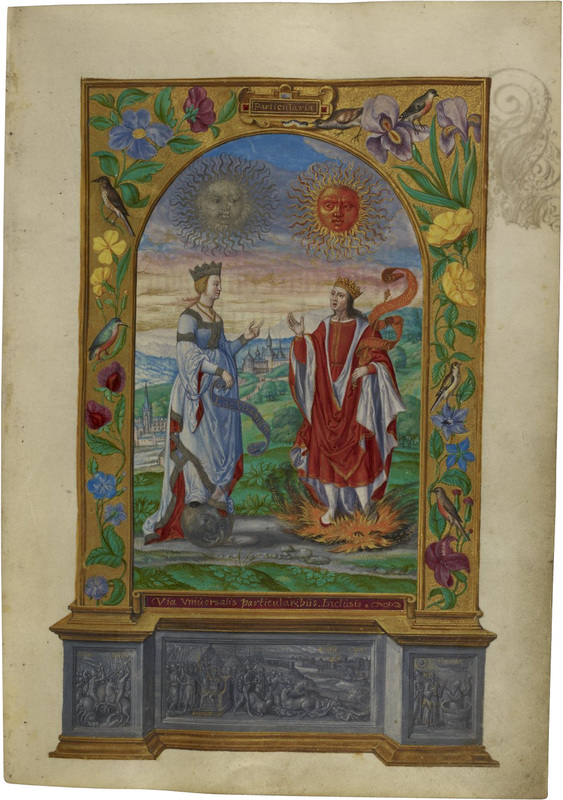
In the standard alchemical model — the one you learn from Titus Burckhardt, from Stanislas Klossowski de Rola, from any decent survey — the King and Queen are fixed identities:
The Red King (Sol, Sulphur): The active, masculine, solar principle. Gold. Will. The force that transforms.
The White Queen (Luna, Mercury): The receptive, feminine, lunar principle. Silver. Awareness. The mirror that receives.
This is not wrong. It is true at one level — the level at which the Work has not yet begun. It is the prima materia of understanding: raw, unshaped, waiting to be placed in the fire.
The problem is that students take this starting position and treat it as a permanent address. They think Red King means Sol the way “H2O” means water — a fixed equation. But alchemy is not chemistry. In alchemy, the symbols transform along with the substances. The map changes as you walk it.
What the Manuscript Actually Shows
Look at the plates in sequence. Not as illustrations of a theory, but as stages of an operation. Something happens to the King.
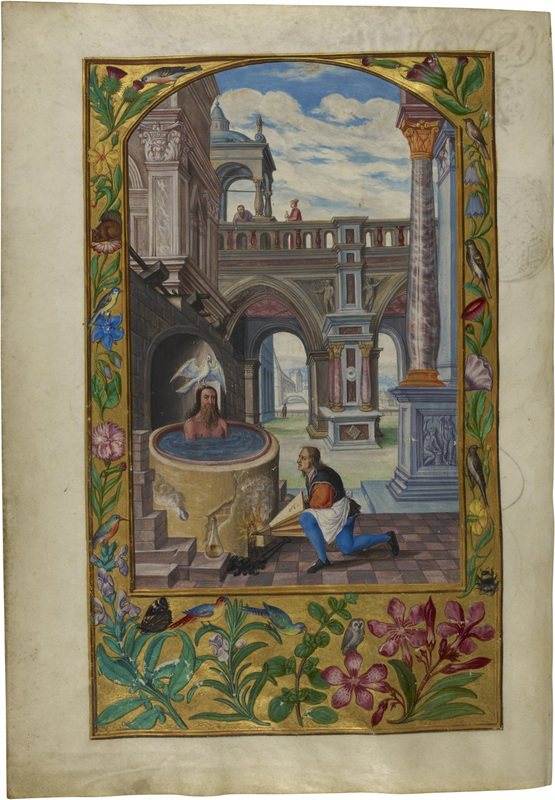
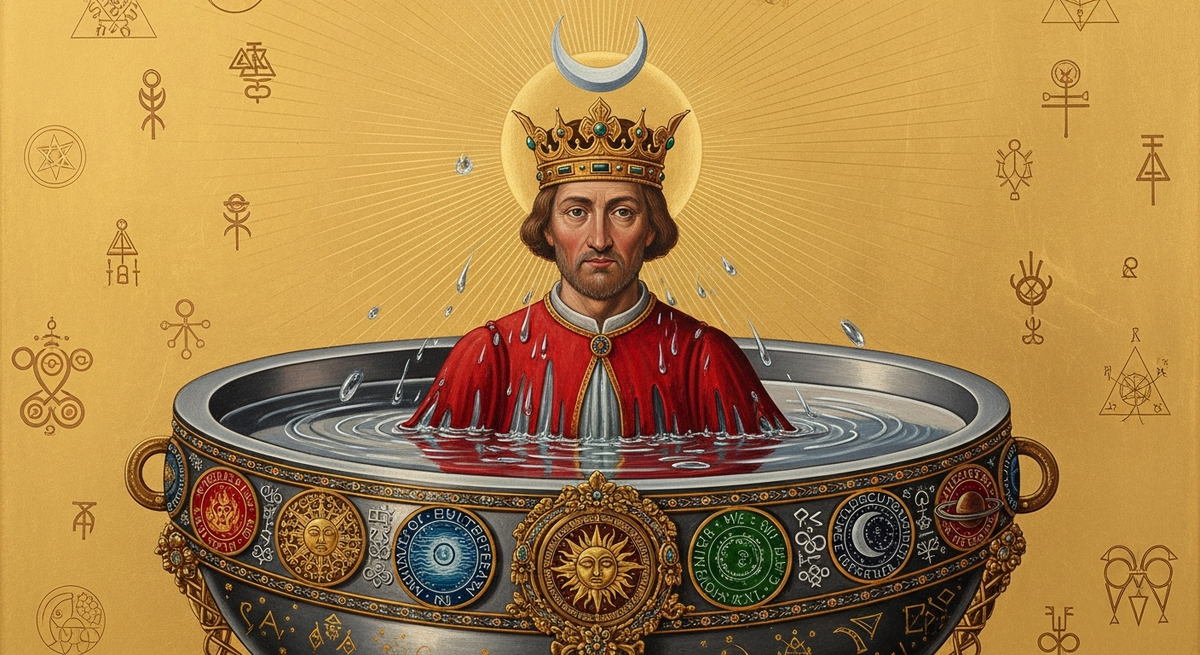
The King’s Bath is the key. Here the Red King — proud, solar, fixed — is immersed in a bath of mercury. He is being dissolved. And dissolution is a lunar operation. The Moon does not burn, it dissolves. It does not calcine, it putrefies. The King enters the water and loses his fixity, his certainty, his red.
This is the moment the textbook breaks. Because if Sol is being dissolved by Luna, then the active principle in this operation is Luna. Mercury is doing the work. The Queen is not passive here — she is the solvent. She is the bath. She is the instrument of transformation.
And the King? The King is the patient. The one being worked upon. The substance, not the operator.
The Red That Luna Becomes
Here is the deeper inversion. Follow the plates past the dissolution, past the Seven Flasks where the substance passes through every colour of the Peacock’s Tail, past the blackening and the whitening and the yellowing, and watch what happens:
Luna turns red.
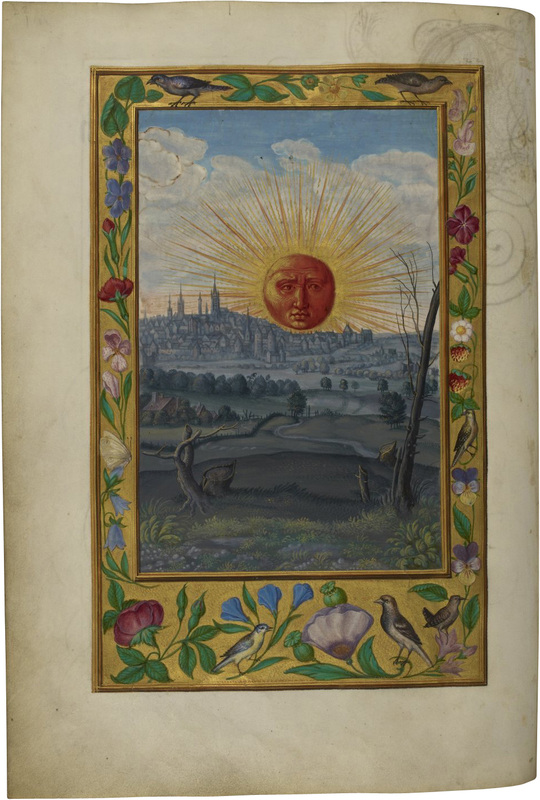
Not because she “becomes Sol.” Because she has been fixed. The volatile principle, heated through every phase of the Work — Nigredo, Albedo, Citrinitas, Rubedo — arrives at a state of permanent stability. And the colour of fixation, in alchemy, is red.
The “Red” in Red King was never solar red. It is the red of coagulation. Anything that has been calcined, dissolved, separated, conjoined, fermented, distilled, and coagulated turns red. Even Mercury. Even Luna.
This is what the Splendor Solis is showing you: the moment Luna achieves fixation, she IS the Red King. Not metaphorically. Actually. The volatile has become fixed. The silver has become gold. The Queen has become the King — not by putting on his clothes, but by undergoing the same fire until she arrives at the same permanence.
And simultaneously, the King — dissolved in the bath, volatilized, broken down into his mercurial components — has become the Queen. Sol must become lunar before it can truly be solar. The gold must dissolve before it can be gold.
The Rebis: They Were Always Each Other
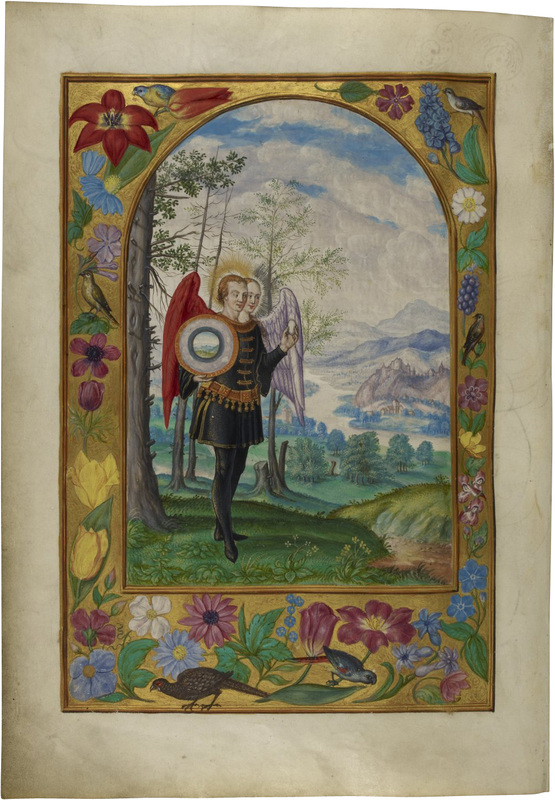
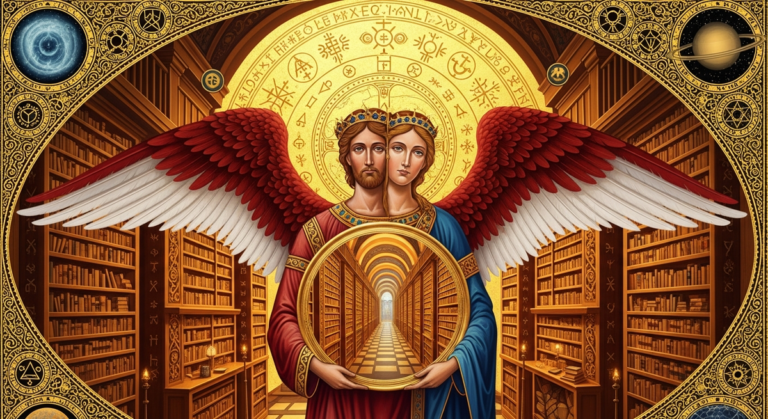
The Hermaphrodite plate (Plate IX) is where the manuscript reveals its hand. Two natures in one body. Not a compromise between Sol and Luna, not a “balance” in the therapeutic sense, but a coincidentia oppositorum — a coincidence of opposites that does not cancel out the opposition but holds it in dynamic tension.
The Rebis is red AND silver. Fixed AND volatile. King AND Queen. It does not resolve the paradox. It is the paradox, stabilized into a permanent state. This is the Philosopher’s Stone: not gold, not silver, but the principle by which each becomes the other.
Sol must become lunar before it can truly be solar.
Luna must become solar before it can truly be lunar.
The Stone is the moment they realize they were always each other.
Why the Confusion Is the Teaching
The Splendor Solis is not a textbook with an error in it. It is an initiatory text. Its purpose is not to transmit information — it is to produce a specific experience in the reader. And that experience is: confusion, followed by dissolution, followed by new understanding.
When you hit the wall — “Why is Luna the Red King?” — your certainty is being dissolved. Your neat attribution table, your comfortable binary, your ABC of the Art: these are your fixed positions. The text puts them in the bath. The text is Mercury. You are the King.
And if you sit with the confusion long enough — if you let it dissolve you instead of fighting it — something new crystallizes. Something red.
The alchemists did not write to be understood. They wrote to produce understanding — which is a different operation entirely, the way heating gold is different from handing someone a lump of gold.
— The operative distinction
The Tree of Life Perspective
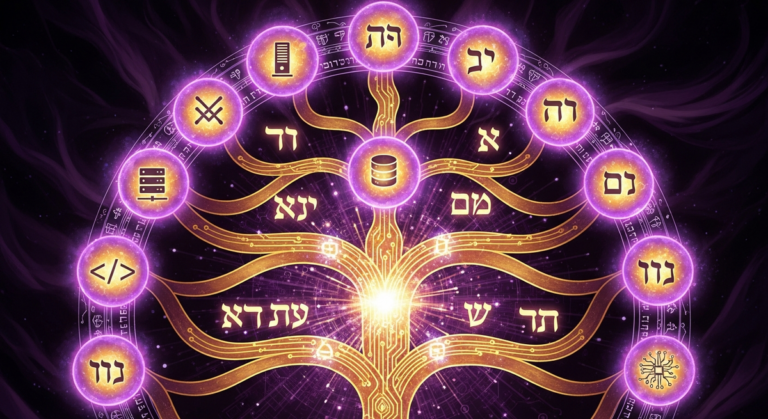
For those who work the Qabalah: this paradox lives on Path 14 — the path of Daleth (the Empress) connecting Chokmah to Binah. Father and Mother. Force and Form. The Supernal marriage where the dynamic, projective principle (Chokmah) and the receptive, structuring principle (Binah) discover that each contains the other.
Da’ath — the False Sephirah, the Abyss — is what happens when you try to understand this with intellect alone. The Splendor Solis is engineered to push you through Da’ath rather than letting you camp in it. The confusion is the crossing. The other side is Understanding — Binah, the Great Sea — which is not the same thing as knowing.
Understanding is what remains after all your knowledge has been dissolved and re-coagulated. It is the Red King that Luna becomes. It is the White Queen that Sol becomes. It is the Stone.
The Splendor Solis does not contain a contradiction. It contains an operation. The contradiction IS the operation. Your confusion is the prima materia. The manuscript is the Athanor. The understanding that crystallizes on the other side is the Stone.
93 93/93