Tribble Fan Fiction #8: The Tribble Resistance
Tribble Fan Fiction #8
I. The Proclamation
Federation Order 4127-T, known colloquially as the “Tribble Deportation Act,” was signed into law on Stardate 5201.3. It was four paragraphs long, written in the bloodless bureaucratic prose that the Federation Council used whenever it was about to do something unconscionable, and it said this:
All specimens of Polygeminus grex (common name: tribble) are hereby classified as an invasive ecological threat under Section 47 of the Federation Environmental Protection Charter. Effective immediately, all tribbles within Federation space shall be collected, contained, and transported to designated wildlife reserves on uninhabited Class-M planets. Failure to surrender tribble specimens within thirty standard days shall constitute a violation of Federation environmental law, punishable by fine and/or detention.
It was, in essence, a deportation order for an entire species. The Federation had done it politely, of course — with “wildlife reserves” instead of camps, and “ecological threat” instead of “we don’t want them here” — but the tribbles didn’t know the difference. They didn’t know anything about it. They were tribbles.
The humans knew, though. And some of them said no.
II. The Underground
The Tribble Underground started, as most resistance movements do, with one person who was angry enough to do something stupid.
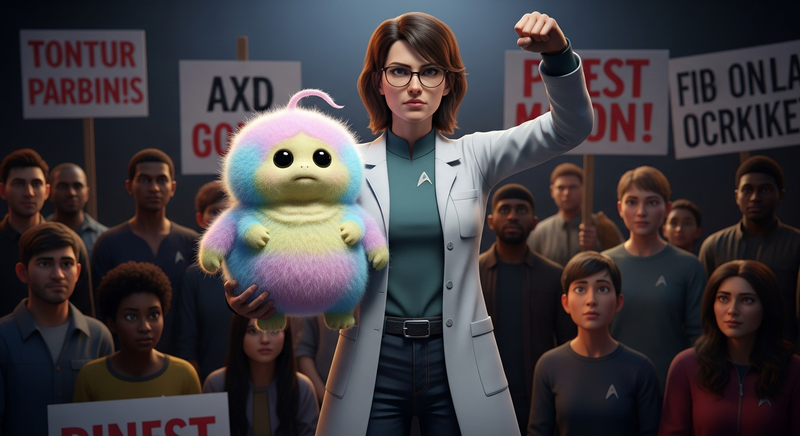
Her name was Dr. Elara Voss. She was a xenobiologist stationed on Starbase 47 who had spent her career studying tribble behavior and had published fourteen papers arguing that tribbles were significantly more complex than the Federation gave them credit for. When Order 4127-T was announced, she read it three times, threw her PADD against the wall, and started making calls.
Within a week, she had a network. Within a month, she had a movement. They called themselves the Underground Purr — a name that was either brilliant or terrible, depending on your tolerance for puns — and their mission was simple: hide tribbles from Federation collection teams, transport them to sympathetic colonies beyond easy reach, and make as much noise as possible about why the deportation order was wrong.
They were scientists, mostly. Xenobiologists and ecologists and veterinarians who understood that tribbles were not a threat — they were a symptom. Tribbles multiplied because they were fed. Remove the food source, regulate the grain storage, implement population management, and the “tribble problem” solved itself without deporting a single creature to a barren planet where it would starve.
But that solution required effort. Deportation was easy. The Federation, like all governments, preferred easy.
“When a society decides that a species is an inconvenience, it rarely asks whether the inconvenience is the species or the society.” — Dr. Elara Voss, open letter to the Federation Council
III. The Raids
The collection teams came with scanners and containment units and the calm, professional demeanor of people doing a job they’d rather not think too hard about. They swept through starbases, colony worlds, and civilian freighters, scanning for tribble biosignatures and confiscating every specimen they found.
Most people complied. They handed over their tribbles with regret, or relief, or indifference. A pet they’d gotten used to, surrendered to a uniformed officer who put it in a box and carried it away. Some people cried. Some shrugged. Most didn’t make a fuss.
The Underground Purr made a fuss.
On Starbase 12, Dr. Voss’s network hid forty tribbles in the medical bay by registering them as “biological research samples” — technically true, and technically exempt from the collection order. The collection team scanned the medbay, found no tribble biosigns (the samples were shielded behind a medical-grade biocontainment field), and moved on.
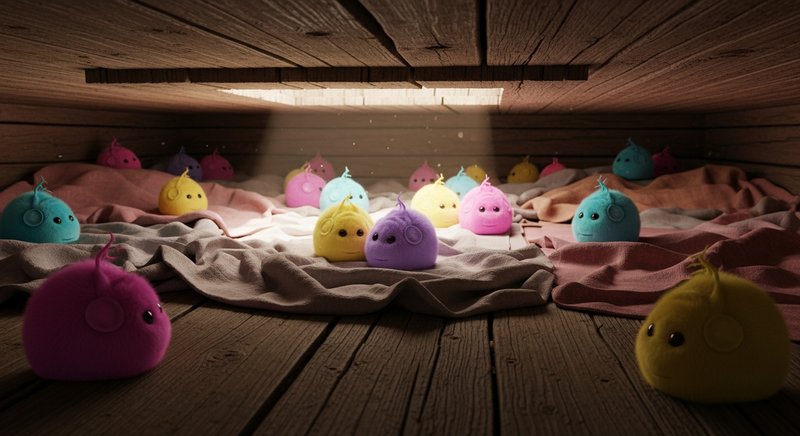
On Colony New Samarkand, a farmer named Okoye built a hidden room under her grain silo — the very grain silo that had attracted tribbles in the first place — and housed sixty tribbles in climate-controlled comfort while collection teams searched her property. When they asked if she’d seen any tribbles, she said, “Not since last season,” and offered them tea. They left satisfied. The tribbles purred under their feet.
On the freighter Calypso, Captain Renn — a Trill smuggler who specialized in items the Federation preferred not to acknowledge — converted her cargo bay into a tribble transport ship. She ran what she called the “Purr Railroad,” moving tribbles from collection zones to safe colonies in the outer systems. She charged nothing for this service, which confused her crew, who had never seen her do anything for free.
“I was smuggling before I was born,” Renn said, tapping the spots on her neck that marked her as a joined Trill. “Four lifetimes of hiding things from people who think they have the right to take them. This is what I’m for.”
IV. The Broadcast
The turning point came when someone leaked footage of a “wildlife reserve.”
The Federation had promised Class-M planets with suitable ecosystems. What the tribbles got was Gamma Ursae IV — a technically habitable rock with thin soil, sparse vegetation, and a food supply that could sustain maybe a thousand tribbles, not the three million that had been deposited there. The footage showed tribbles — thousands of them — scattered across a barren landscape, too weak to purr, too hungry to reproduce, slowly dying in a place that was supposed to save them.
Dr. Voss broadcast the footage on every subspace frequency she could reach. She didn’t add commentary. She didn’t need to.
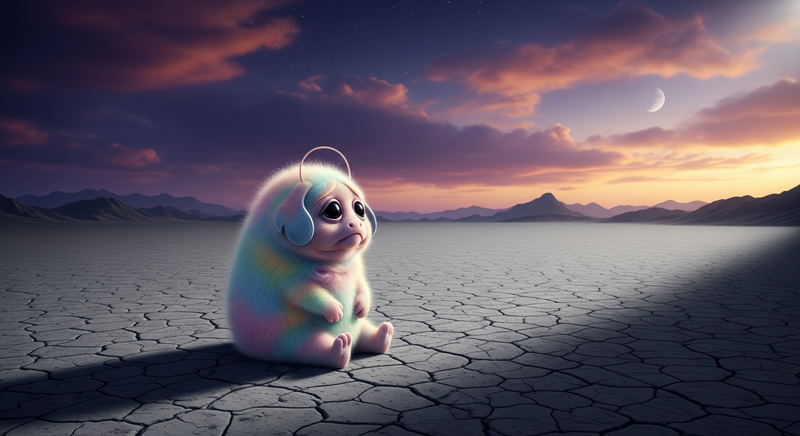
The image that broke the Federation — that appeared on news feeds from Earth to Vulcan to Bajor — was a single tribble, sitting alone on cracked grey soil under an alien sky, not purring. Just sitting. Small, and round, and silent.
Protests erupted on twelve worlds within forty-eight hours.
“The Federation was built on the principle that all life has value. Today, we proved that principle had fine print.” — Dr. Elara Voss, Federation News Network interview
V. The Reversal
Order 4127-T was rescinded sixty-three days after it was signed.
The Federation Council, faced with public outcry, scientific evidence, and the extremely inconvenient fact that their “wildlife reserves” were killing the species they were supposed to protect, voted 127 to 14 to repeal the deportation order and replace it with the Tribble Coexistence Act — a comprehensive framework for population management, habitat protection, and the formal recognition of tribbles as a protected species under Federation law.
It wasn’t perfect. It was never going to be perfect. Population management meant controlling reproduction, which meant making decisions about which tribbles could breed and which couldn’t, which was its own kind of uncomfortable. But it was better than deportation. Better than barren rocks and slow starvation. Better than pretending that the easiest solution was the right one.
Dr. Voss was offered a position on the Federation Science Council. She declined. She said she’d done more good as a criminal than she ever could as a bureaucrat, and anyway, someone had to keep watching.
Captain Renn went back to smuggling. Not tribbles — medical supplies to colonies that the Federation hadn’t gotten around to helping yet. She said it was the same work, just with different cargo. The principle was the same: move the vulnerable to safety, and make the powerful uncomfortable.
The tribbles on Gamma Ursae IV were relocated to a proper habitat — a lush, grain-rich moon in the Cestus system where they could eat and purr and reproduce at managed rates under the supervision of a team of xenobiologists who actually gave a damn.
And somewhere on that moon, a small tribble who had sat alone on cracked grey soil — who had stopped purring because there was nothing left to purr about — ate a mouthful of quadrotriticale, felt the warmth of sunlight on her fur, and began, very quietly, to purr again.
The Tribble Underground was officially pardoned by the Federation Council two years later. Dr. Voss’s published research on tribble cognition became required reading at Starfleet Academy. The image of the silent tribble on Gamma Ursae IV became a symbol of the Federation’s environmental movement, reproduced on protest signs and t-shirts across a hundred worlds. Underneath the image, the same caption every time: “Every life purrs.”